Pedal types
Overdrive Pedals: Choose the Shape of the Push
“Overdrive” covers transparent boosts, mid-focused pushes, amp-like clipping and heavily colored preamps.
Research guide · Updated July 27, 2026Choose the job in the gain structure
For an already driven amplifier, lower gain and controllable output level may matter most. Into a clean platform, the pedal’s clipping texture and EQ become a larger part of the complete sound.
Check whether bass stays full or tightens, whether mids are emphasized, and whether treble is a tone control or an active EQ. Those choices determine how the pedal sits with bass and cymbals.
Test dynamics and cleanup
Listen at several picking strengths and roll the guitar volume down. Some drives retain clarity and respond gradually; others compress early for a smoother, more uniform feel.
Neither behavior is automatically superior. Dynamic range favors expressive edge-of-breakup playing, while compression can make sustained lines and consistent rhythm easier.
Compare controls at real settings
Set output to matched loudness and compare low, medium and high gain. If the pedal will act as a boost, confirm that it has enough clean output before clipping overwhelms the role.
Include the intended guitar and amplifier. Pickup output and amplifier voicing can reverse a conclusion formed through a different rig.
Suggested pedals
Suggested pedals for this purpose
These current models match the role described in this guide. Compare their controls, connections and power needs before choosing.
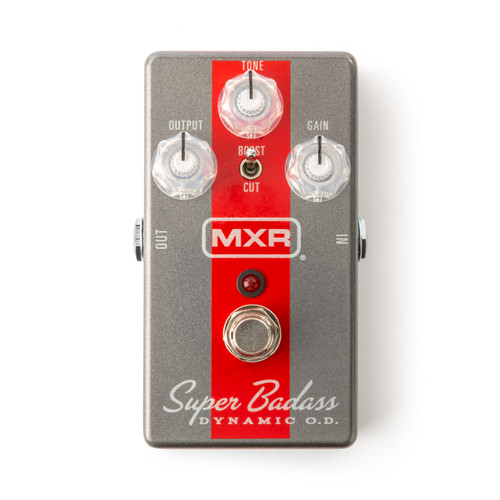
MXR M249 Super Badass Dynamic O.D.
MOSFET overdrive that moves from a clean push to a vintage high-gain grind while retaining picking dynamics.
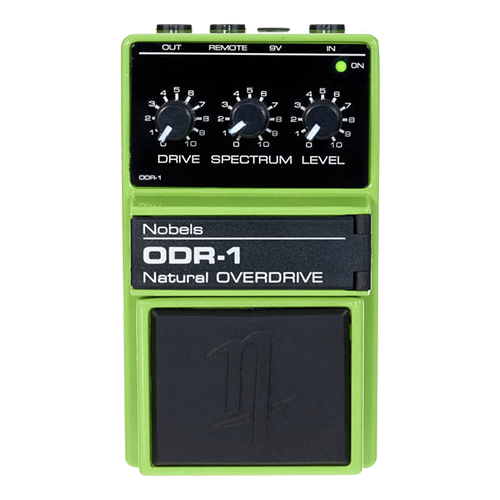
Nobels ODR-1 BC
A broad, open overdrive with a Spectrum control, switchable bass cut and 9–18V operation for additional headroom.

BOSS BD-2 Blues Driver
A touch-sensitive drive with a wide range from clean boost and light breakup to a thicker, more aggressive overdrive.
Shop by purpose
Explore pedal types gear
Compare controls, connections and power requirements at the retailer before choosing.