Pedal types
Wah, Filter, Pitch and Octave Pedals
These pedals respond strongly to technique and input signal. Test the playing gesture as carefully as the tone.
Research guide · Updated July 27, 2026Evaluate the controller
For wah and expression-controlled effects, check treadle resistance, switch placement, travel and whether the sweep is usable through your normal stance. Auto filters replace the treadle with envelope sensitivity, so picking dynamics become the controller.
Expression inputs may require a specific resistance or wiring standard. Confirm compatibility rather than assuming every expression pedal is interchangeable.
Test tracking across the real range
Pitch and octave pedals can respond differently to low notes, chords, bends and fast attacks. Test the register and articulation you use, including clean and distorted inputs.
Placing pitch early usually gives its detector a simpler signal. Moving it after fuzz or modulation can create deliberate instability but may reduce predictable tracking.
Check dry signal and harmony controls
Determine whether the effect blends with dry guitar, replaces it, or offers independent outputs. Harmony modes may need a key and scale, while chromatic shifts work interval by interval.
Latency becomes most noticeable at equal wet and dry levels or on sharp attacks. Compare feel through the complete monitoring path, not only headphones connected differently from the performance rig.
Suggested pedals
Suggested pedals for this purpose
These current models match the role described in this guide. Compare their controls, connections and power needs before choosing.
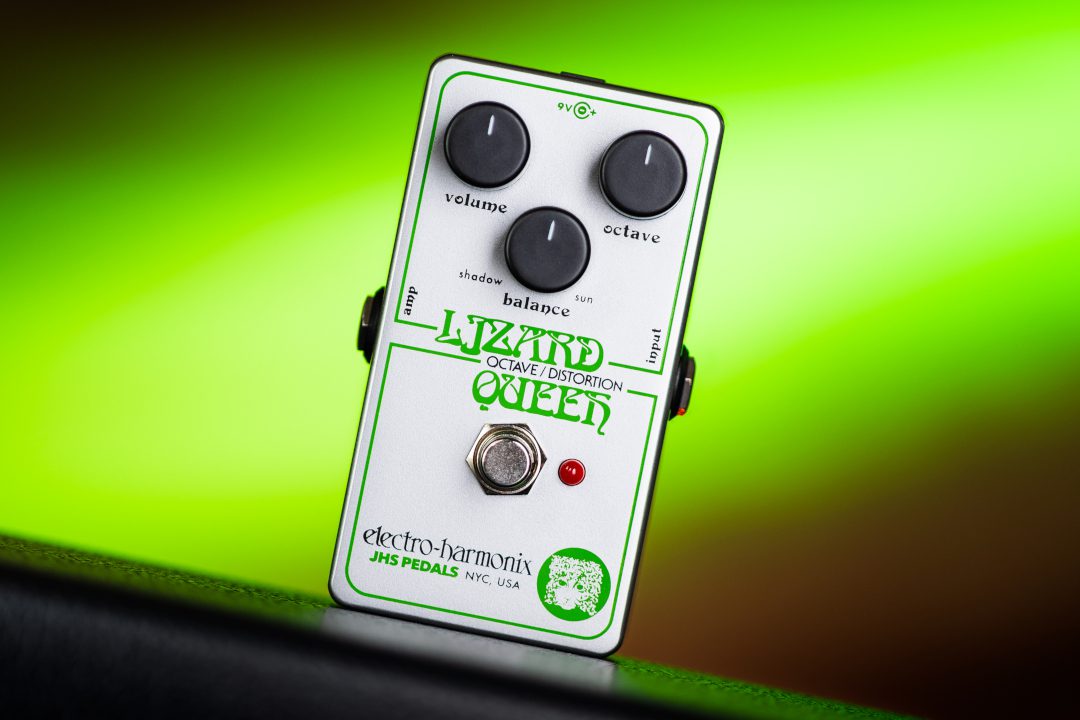
EHX/JHS Lizard Queen
A sought-after octave fuzz with a blendable octave-up voice and a Balance control that moves from smooth to raspy.
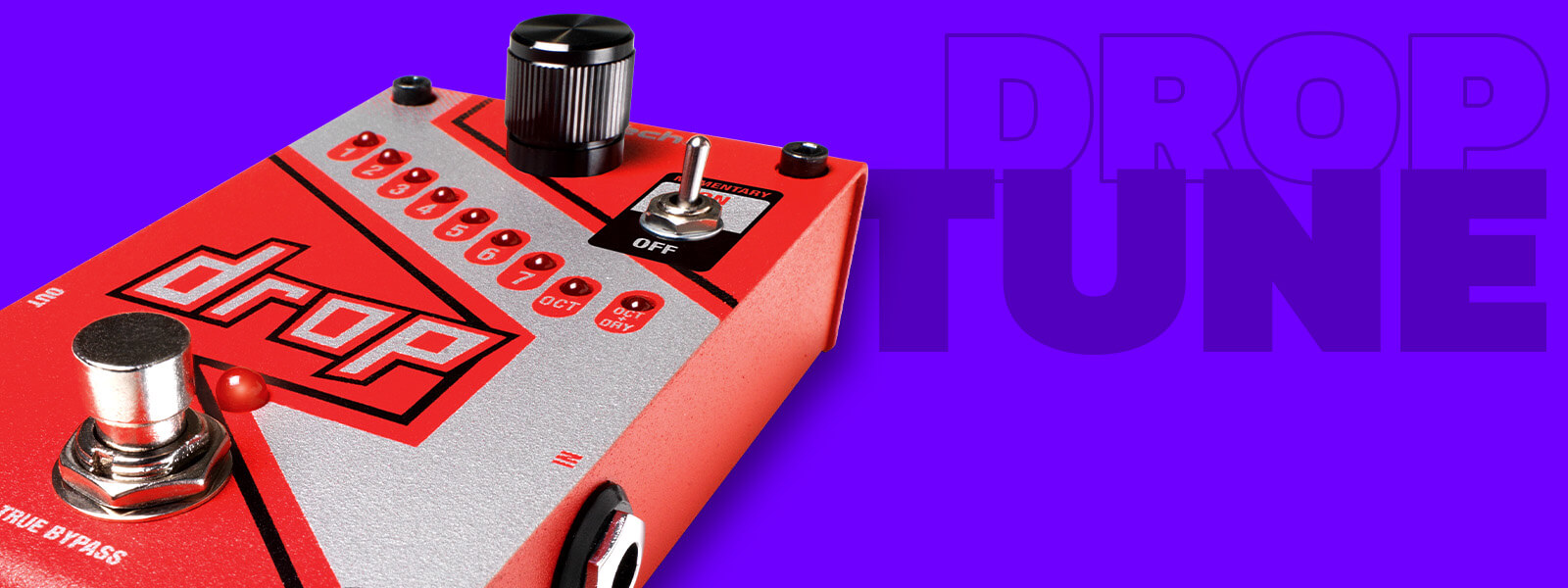
DigiTech Drop
A polyphonic pitch pedal for dropping the guitar from one semitone to a full octave without changing instruments.
Shop by purpose
Explore pedal types gear
Compare controls, connections and power requirements at the retailer before choosing.