Pedal types
Fuzz Pedals: Pick a Circuit Behavior, Not Just More Gain
Fuzz can be smooth, splattering, gated, octave-rich or almost clean at the guitar volume knob.
Research guide · Updated July 27, 2026Start with interaction at the guitar
Test full guitar volume, then roll it back in small steps. Some vintage-derived fuzzes become bright, clear overdrives; others lose level or keep their dense texture. Pickup type and input buffering strongly affect this behavior.
If cleanup is central, confirm the pedal works first in the chain and test it with the exact wireless, tuner or buffer that would precede it.
Choose texture and stability
Sustain-focused fuzz keeps notes connected; gated fuzz cuts off sharply and can create percussive rhythm. Bias controls may move between those behaviors and can also change temperature sensitivity or noise.
Octave fuzz responds to note position, pickup selection and technique. Treat the octave as an instrument behavior rather than an always-equal layer.
Fit the low end to the rig
Dense low frequencies can overwhelm a bass-heavy amplifier or down-tuned part. Look for input bass controls, tone stacks or blend options when the rig needs tighter articulation.
Compare power guidance carefully. Some older-style circuits have unusual polarity or supply requirements and should not share a standard chain without explicit compatibility.
Suggested pedals
Suggested pedals for this purpose
These current models match the role described in this guide. Compare their controls, connections and power needs before choosing.
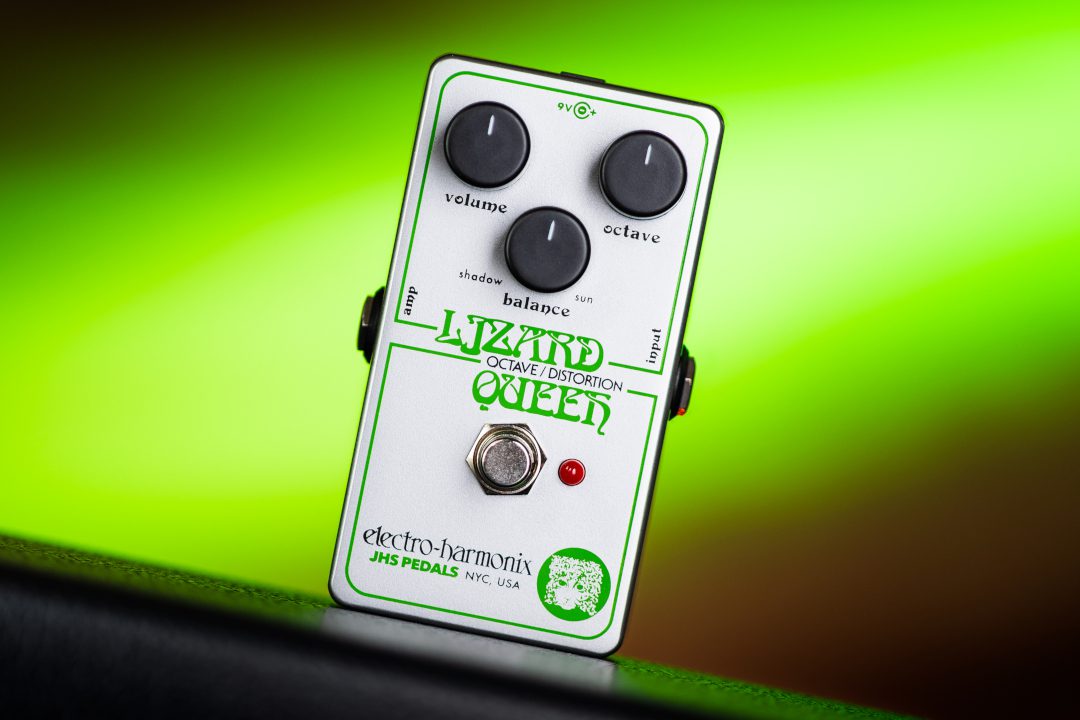
EHX/JHS Lizard Queen
A sought-after octave fuzz with a blendable octave-up voice and a Balance control that moves from smooth to raspy.
Shop by purpose
Explore pedal types gear
Compare controls, connections and power requirements at the retailer before choosing.