Pedal types
Delay Pedals: Time, Feedback, Rhythm and Control
A delay earns its place when its timing and control method fit the songs, not when it has the most algorithms.
Research guide · Updated July 27, 2026Choose the repeat character
Digital-style repeats preserve detail; analog-style repeats usually darken as they decay; tape-style modes add filtering, modulation and saturation. Use these as behavioral families and listen to the specific implementation.
Set one repeat at equal level and compare how it sits behind the dry note. A beautiful solo repeat may compete with vocals or rhythm parts.
Match timing controls to performance
Tap tempo matters when songs change tempo or require exact rhythmic repeats. Check available subdivisions, whether tap is onboard, and what a hold gesture does during performance.
For ambient or sound-design use, maximum delay time, self-oscillation behavior, reverse modes and expression control may matter more than tap accuracy.
Count presets and connections honestly
A few accessible presets can cover a set better than hundreds that require menu navigation. Check whether changing presets spills existing repeats or cuts them off.
Stereo delay may create ping-pong, independent channels or a summed input. Read the routing description and verify MIDI or external-switch requirements before budgeting board space.
Suggested pedals
Suggested pedals for this purpose
These current models match the role described in this guide. Compare their controls, connections and power needs before choosing.
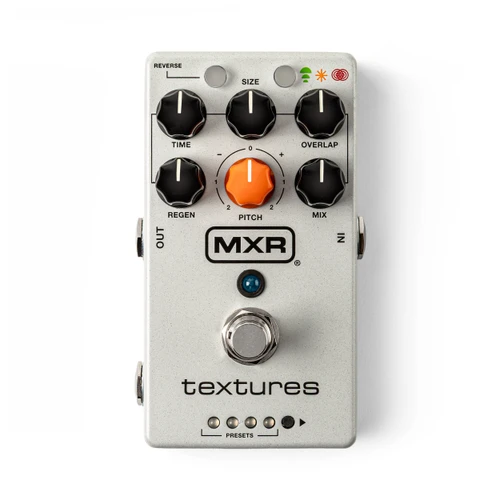
MXR M310 Textures
A granular sampler for frozen layers, shifting pads and glitched rhythms, with presets that provide useful starting points.
Shop by purpose
Explore pedal types gear
Compare controls, connections and power requirements at the retailer before choosing.