Pedal types
Chorus, Phaser, Flanger, Tremolo and Vibrato Pedals
Modulation becomes easier to choose when you identify whether pitch, phase, delay time or volume is moving.
Research guide · Updated July 27, 2026Identify the moving element
Chorus combines a delayed, modulated copy with the dry signal; vibrato varies pitch without the same dry blend; phaser shifts phase through moving notches; flanger uses very short modulated delay and feedback; tremolo varies level.
These definitions predict the texture but not the exact voice. Waveform, range and filtering create major differences within each family.
Match speed range to the song
Slow settings add width or gentle movement, while fast settings become an audible pulse or pitch effect. Tap tempo and subdivisions are useful for rhythmic tremolo and some phasers, but less essential for a fixed chorus texture.
Check whether depth remains subtle enough at low settings. A pedal that starts dramatic may be excellent for effects but difficult as an always-on layer.
Verify stereo and level behavior
Stereo outputs may alternate phase, pan modulation or create independent voices. Mono compatibility matters if the signal may later be summed.
Listen for volume drop, low-frequency loss and added noise when engaged. Placement before gain blends modulation into clipping; after gain preserves a clearer sweep.
Suggested pedals
Suggested pedals for this purpose
These current models match the role described in this guide. Compare their controls, connections and power needs before choosing.
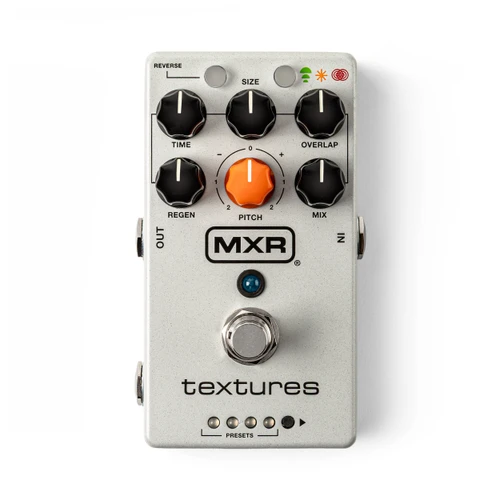
MXR M310 Textures
A granular sampler for frozen layers, shifting pads and glitched rhythms, with presets that provide useful starting points.
Shop by purpose
Explore pedal types gear
Compare controls, connections and power requirements at the retailer before choosing.