Gain
Gain Stacking: Overdrive, Distortion and Fuzz in Sequence
Stacked gain works best when each stage has a job: foundation, push, texture or volume lift.
Research guide · Updated July 27, 2026Assign roles before setting knobs
Choose one pedal as the main voice and set it alone. A second pedal can tighten the input, add saturation, change midrange or raise output. Trying to maximize gain on both usually hides the character that made either pedal useful.
Use the guitar volume control as part of the test. Some circuits clean up smoothly while others retain compression or gating.
Remember that the later pedal receives the stack
The first pedal changes the signal that hits the second; the second then imposes its headroom, filtering and clipping. Reversing two pedals can therefore create a different sound even at identical knob positions.
A low-gain, higher-level drive into a medium-gain foundation often adds focus. Reversing them can use the first pedal as a textured voice that the later stage compresses and equalizes.
Control noise and perceived loudness
Match solo levels before combining, then reduce gain as stages accumulate. Extra treble and compression can sound louder without increasing meter level, so compare in a mix or backing track.
Power each pedal correctly and test the stack away from lighting supplies and computers. Noise gates can manage pauses, but they do not repair a noisy supply or excessive gain structure.
Suggested pedals
Suggested pedals for this purpose
These current models match the role described in this guide. Compare their controls, connections and power needs before choosing.
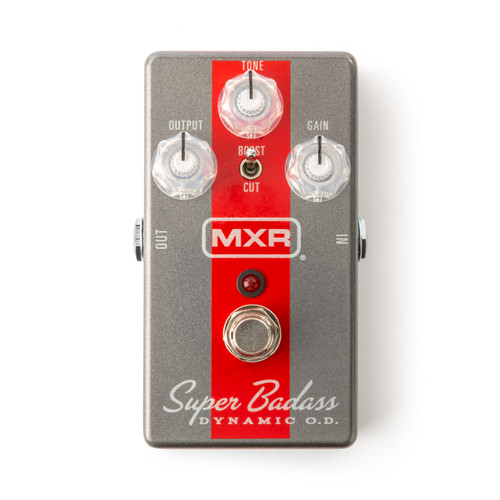
MXR M249 Super Badass Dynamic O.D.
MOSFET overdrive that moves from a clean push to a vintage high-gain grind while retaining picking dynamics.
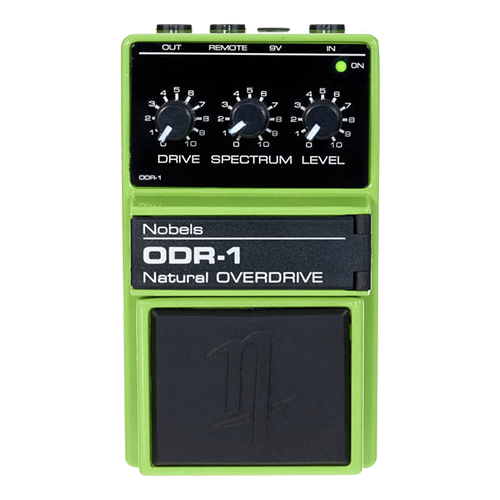
Nobels ODR-1 BC
A broad, open overdrive with a Spectrum control, switchable bass cut and 9–18V operation for additional headroom.

BOSS BD-2 Blues Driver
A touch-sensitive drive with a wide range from clean boost and light breakup to a thicker, more aggressive overdrive.
Shop by purpose
Explore gain gear
Compare controls, connections and power requirements at the retailer before choosing.